Research Feature
Competency-Based Management Framework for Canadian Policing
Competency-Based Management Framework for Canadian Policing
Director of Outreach and Communications |
Canadian Police Knowledge
Network (CPKN)
Under the leadership of Dominic Mallett, Innovation Advisor, Department of Innovation, CPKN; Dr. Angela Ripley, Organizational Psychologist and Education Consultant; and in collaboration with the Competencies Subcommittee of CPKN’s National Advisory Committee, this modernization marks a vital advancement in aligning police competencies with the evolving landscape in society.
Originally developed by the Police Sector Council in 2013, the CBMF has not been revised until this year. Due to a growing need from police services across Canada, this comprehensive review ensured the framework remained relevant, accurate, effective, and reflective of contemporary needs within Canadian policing. The updated CBMF now comprises 22 core competencies, a reduction from the initial 52. It has been reorganized into two primary areas: Personal Skills and Leadership Skills, which are further subdivided into six domains, each encapsulating specific core competencies.
Read the CPKN article here.
Read the full report here.
CPKN Releases 2025 Annual Literature Review: Highlighting Key Trends in Policing
CPKN Releases 2025 Annual Literature Review Highlighting Key Trends in Policing
Communications Coordinator |
Canadian Police Knowledge
Network (CPKN)
The Canadian Police Knowledge Network (CPKN) has published its 2025 Annual Literature Review, offering a comprehensive, evidence-based summary of the trends shaping police education and professional development in Canada and the United States.
Four key themes are identified in this review: mental health and wellness, police militarization and use of force, the impact of social media on police-public interactions, and the integration of emerging technologies. Using open-access research from 2024, this review offers valuable insights to help shape training, policy, and leadership decisions.
Read the CPKN article here.
Read the full report here.
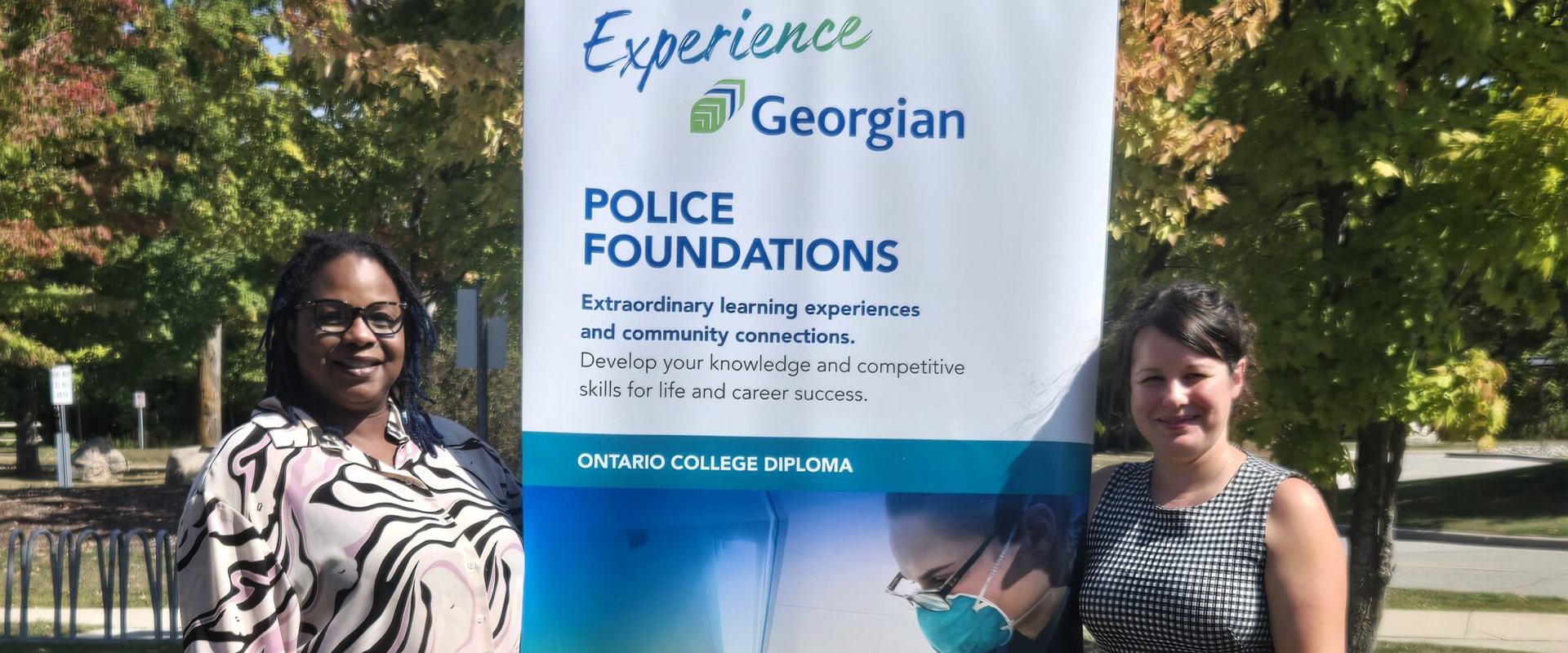
Equity Forward: Advancing Inclusion and Anti-Oppression Training in Policing
Equity Forward: Advancing Inclusion and Anti-Oppression Training in Policing
Program Coordinator | Police Foundations
Georgian College
Visible minorities in Canada often distrust the criminal justice system due to continued overt, covert and systemic racism. In particular, police are felt to target them unjustifiably (Ungerleider & McGregor, 1993). Continued incidents of police brutality and discrimination against minority groups have raised concerns about the need for further training and questioned the adequacy of police training programs (Andersen et al., 2023; Idoko, 2024). Despite the recent focus on effectively policing diverse communities, there is a paucity of research on the types of diversity programs and their effectiveness in improving police-community relations in Canada.
This research project aims to expand on the limited research available on diversity training in Canadian police services by working closely with two police services in Ontario to address their needs. The goals are to identify the main issues in their communities concerning policecommunity relationships, develop inclusion and anti-oppression training, and assess its effectiveness over time. This three-year project will utilize a sequential mixed methods design. This study seeks to work closely with two police services, which are both forward-thinking and innovative organizations, to identify critical concerns in their
communities as they relate to police-community relations, to develop an IATP customized to their communities' specific needs and to assess its effectiveness over time. Our research project has the potential to significantly impact, and drive innovation related to diversity training programs for police officers in Canada.
Read the Georgian College article here.